
89%
First-time customers
of completed Mirra orders
Case study ·

89%
First-time customers
of completed Mirra orders
-39%
Discount reliance
vs standard orders
12.0%
Repeat purchase rate
vs 5.1% for non-Mirra customers
Measured from completed Try at Home orders, after returns.
“I have really narrow feet, so buying heels online is always a bit tricky. I tried the platform heels in two sizes just to see which felt better. So good being able to compare them properly before buying.”
Buying footwear online is one of the hardest fashion purchases to get right. Sizing, width, heel height and comfort cannot be judged from a product page, so shoppers hesitate, guess or abandon the cart.
Mirra lets shoppers try multiple sizes and styles at home, walk in them, compare the fit in person and only pay for what they keep.
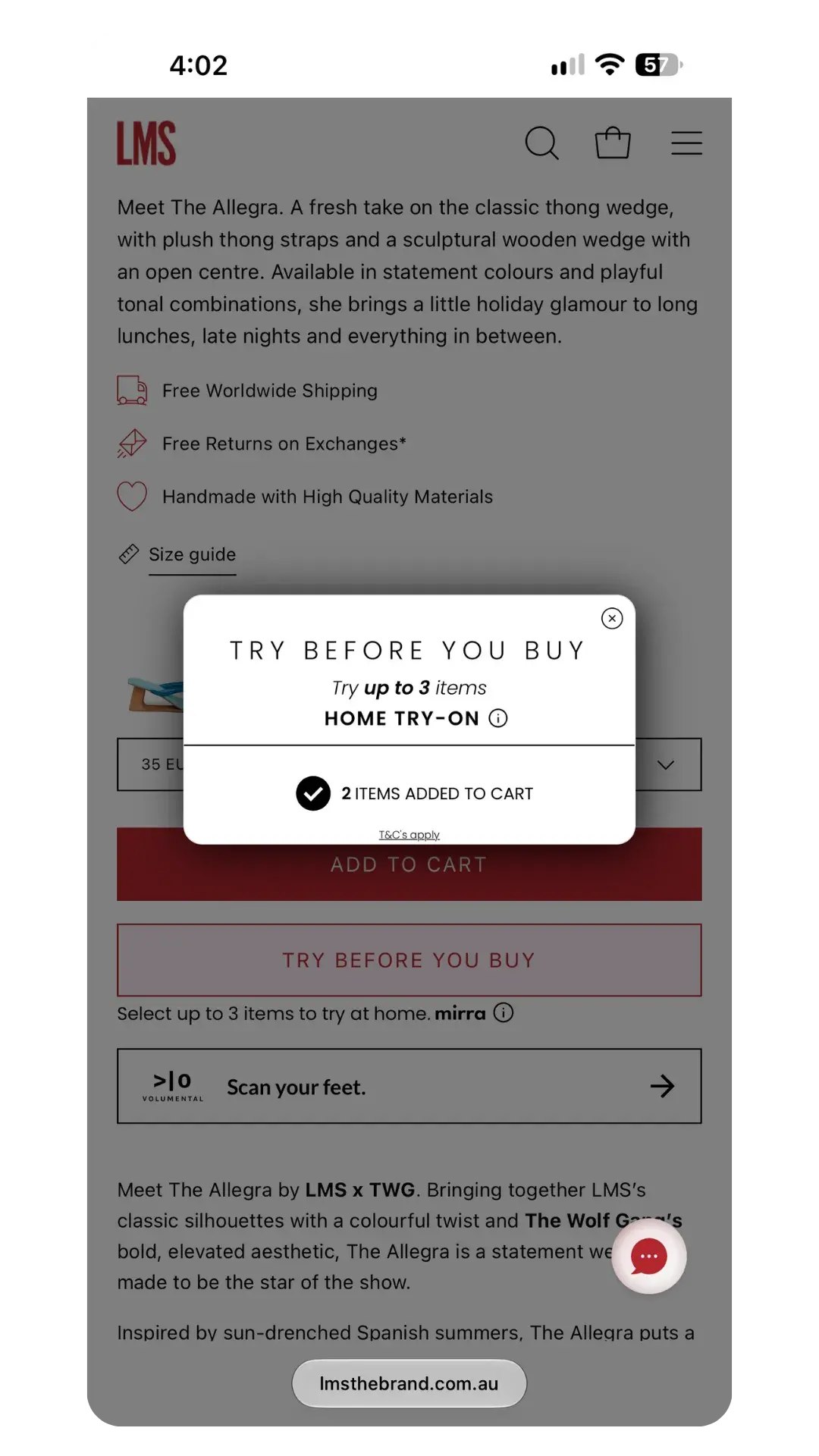
On LMS Shoes' site
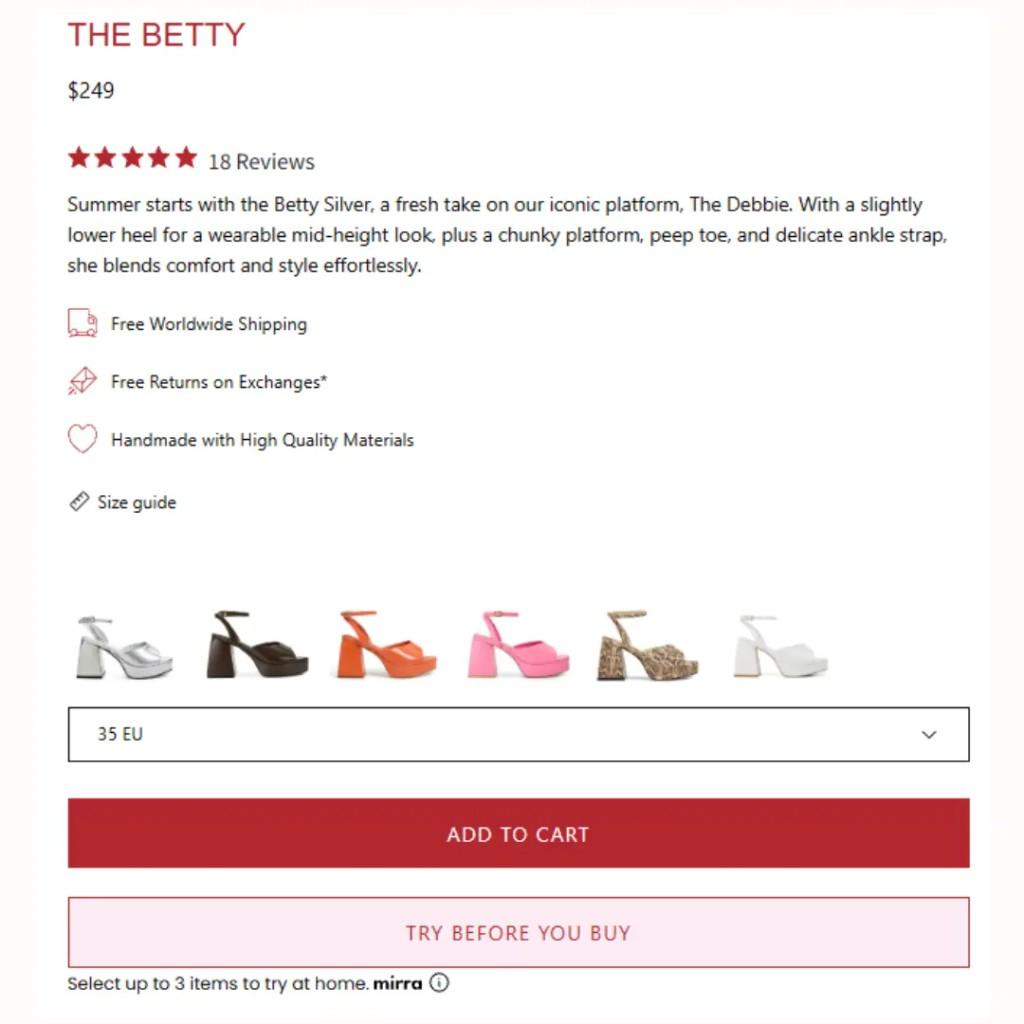
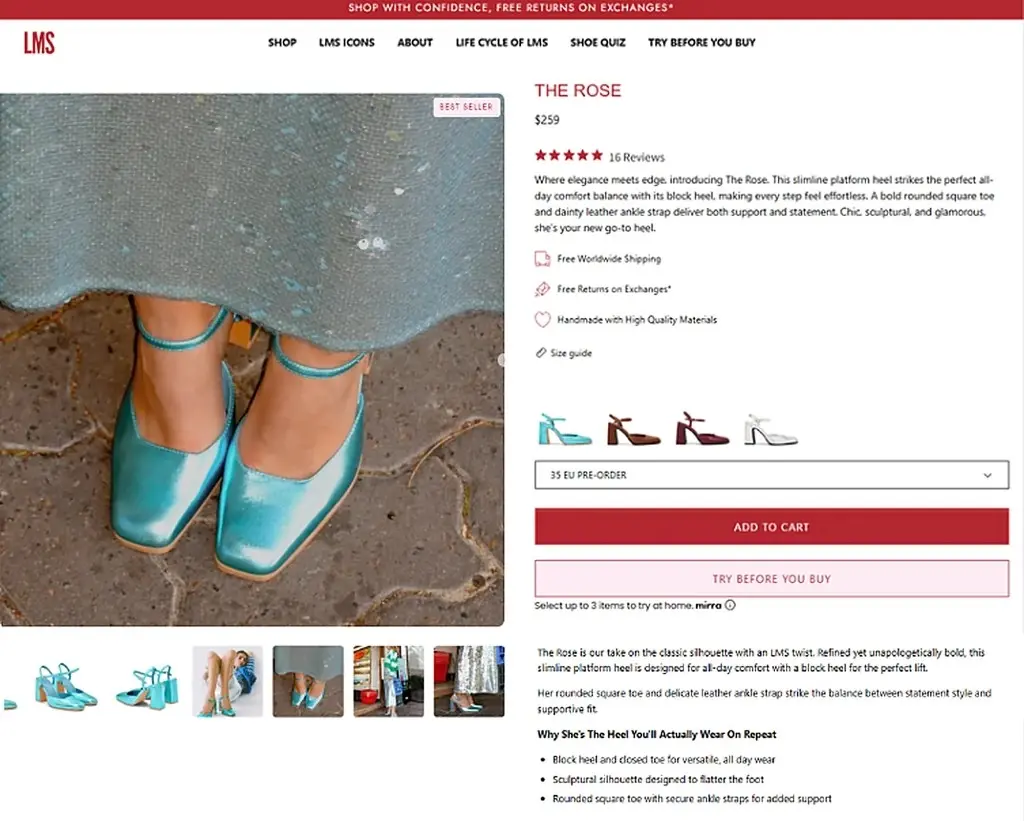
How it works
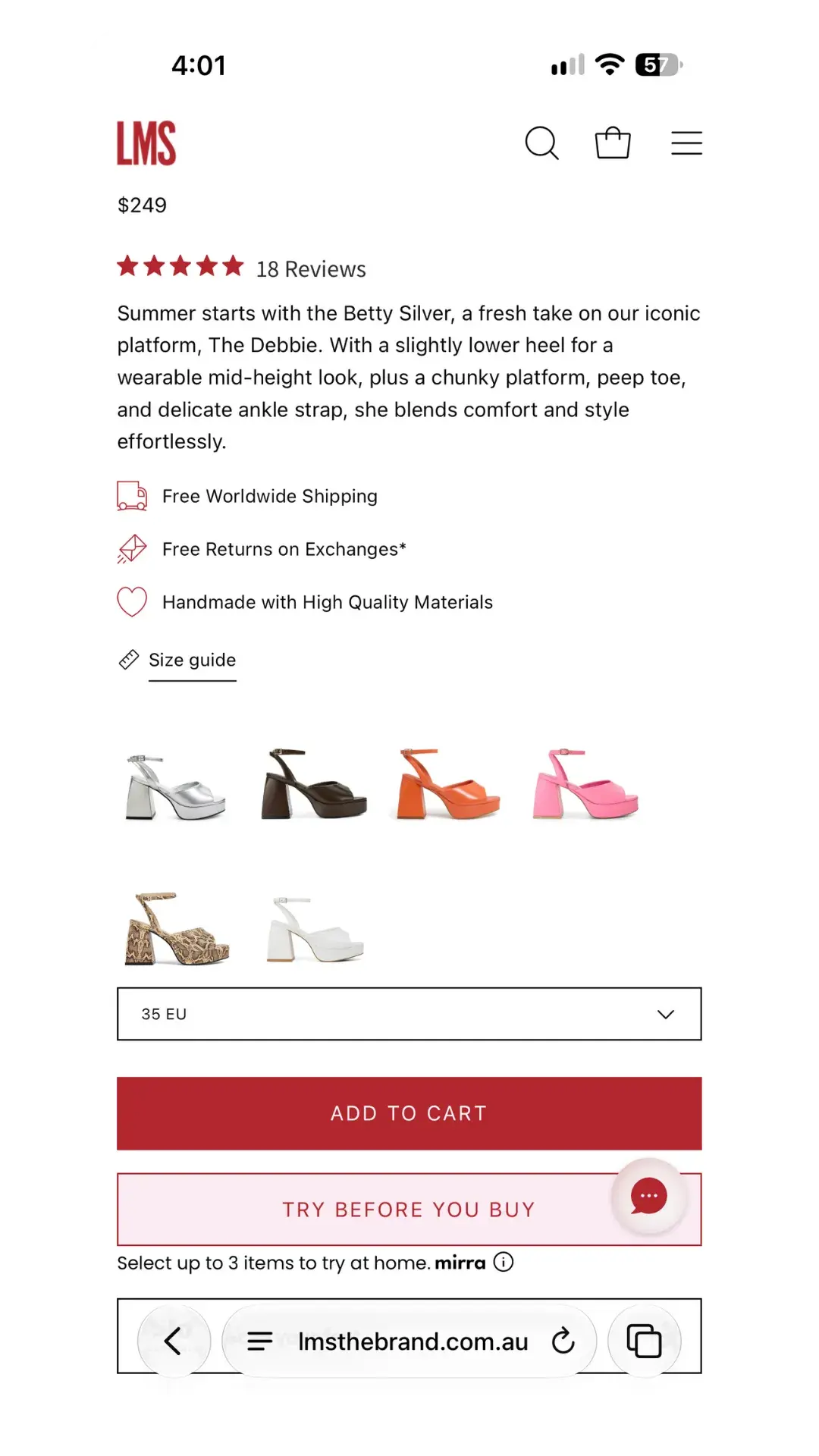
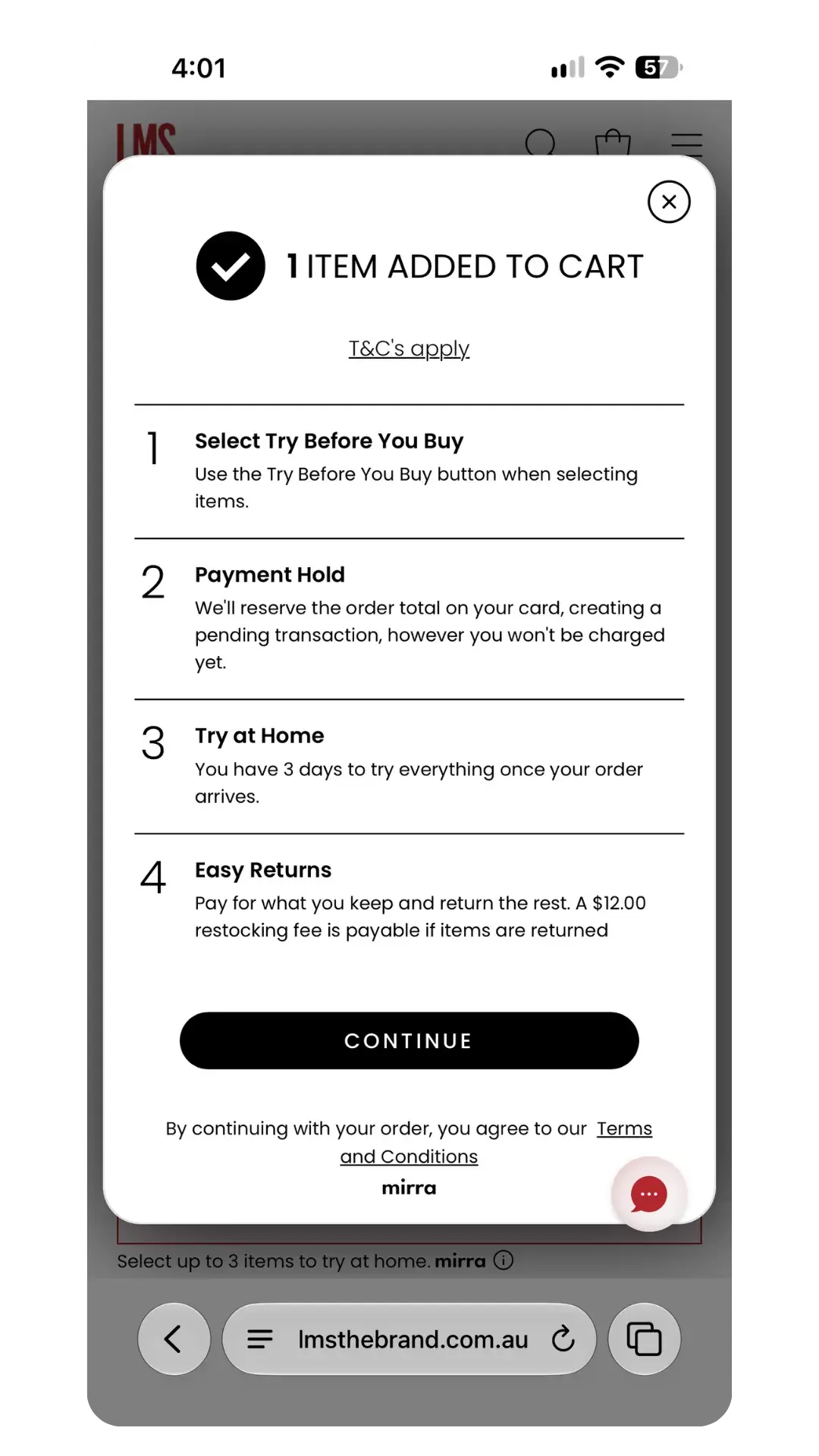
Select Try at Home
Customers tap Try at Home when selecting items.
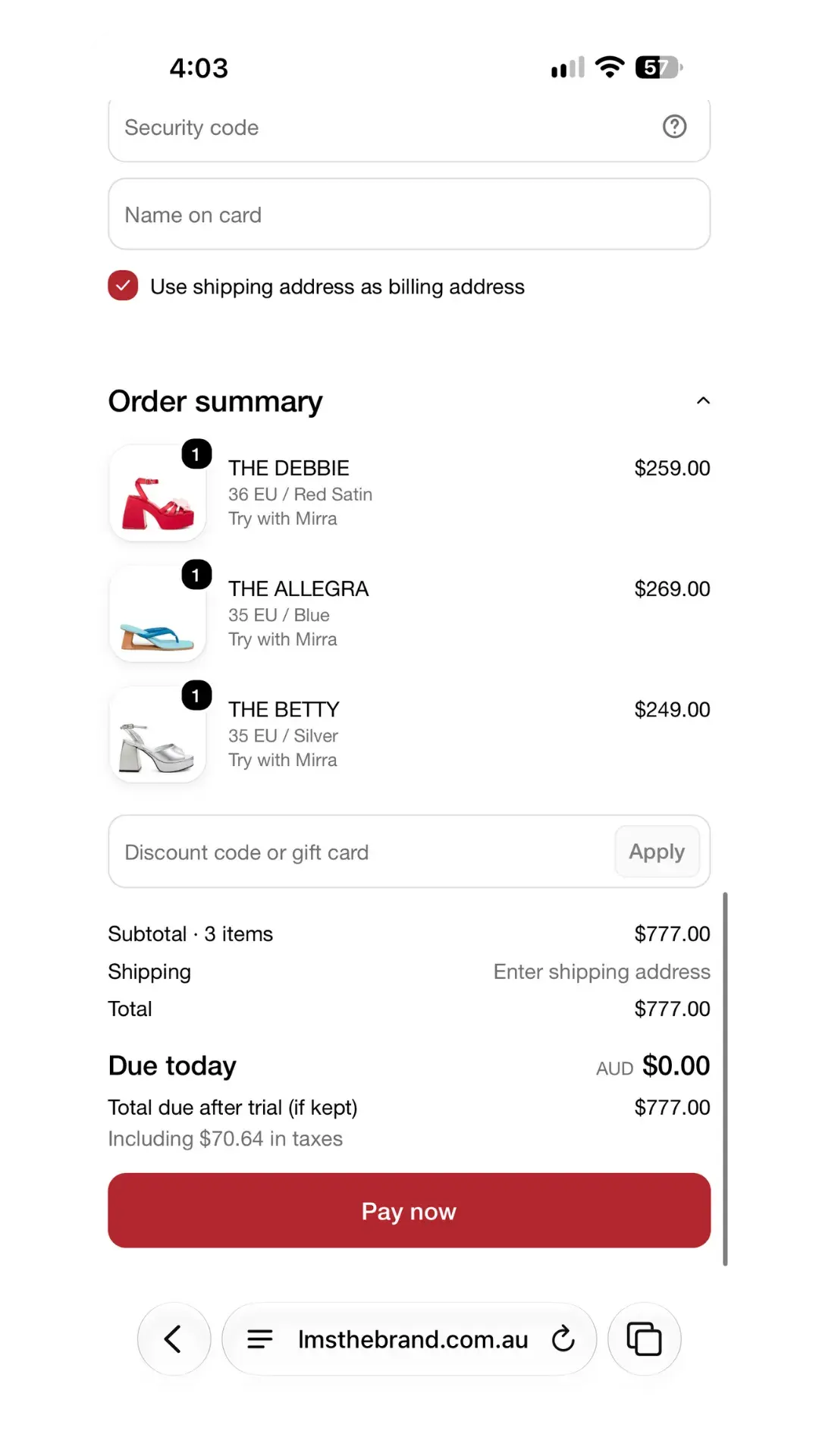
Payment Hold
The order total is reserved on their card as a pending transaction. They aren't charged yet.
Try at Home
They have 3 days to try up to three pairs once their order arrives, including different sizes and styles.
Easy Returns
They pay for what they keep and return the rest. Brands decide whether to charge a return fee and how much.
Why it matters
When customers cannot feel fit and comfort in advance, hesitation shows up as cart abandonment: a lost sale a brand never sees in its returns data.
A shoe that looks perfect on a product page can pinch, slip or sit completely differently on a real foot. At a price point where a pair is a considered purchase, that in-hand, on-foot moment is where trust is won. LMS Shoes just needed a way to get customers there.
Footwear sizing rarely means the same thing twice. Width, arch, heel height and how a last is shaped all change how a shoe actually feels, and there is no size chart that communicates comfort after a few minutes of wear. A customer may love the look of a heel and still hesitate because they cannot know whether it will work on their foot.
That uncertainty is especially sharp for shoppers with narrow or hard-to-fit feet, and for styles they have never worn before. Get it wrong once and the brand does not just lose that order, it risks losing the customer's trust in every future pair too.
Try Before You Buy answers the question a size guide never could. A customer can order more than one size or style, walk around at home, compare how each pair feels and decide with confidence rather than hope. Nothing is charged upfront, so trying feels risk-free rather than committal.
For a brand built on distinctive silhouettes and all-day wear, that matters beyond the individual sale. The on-foot experience is where LMS quality actually speaks for itself, and Try Before You Buy is what gets a hesitant customer to that moment instead of losing them at the product page.
Fit is not the only thing on the line when a customer buys shoes online, comfort and quality perception are too. A pair has to feel as considered in person as its price suggests, and that is not something photography, no matter how good, can fully deliver. When customers cannot verify that in advance, hesitation shows up as cart abandonment rather than as a return, a lost sale a brand never even sees in its returns data.
Try Before You Buy moves that verification earlier. Customers get to experience the fit, the comfort and the quality for themselves, before they have committed, which turns a considered footwear purchase into a confident one rather than a hopeful one.