+44%
Average order value vs standard orders
measured after returns
Case study ·

+44%
Average order value vs standard orders
measured after returns
-82%
Discount reliance
vs standard orders
20.5%
Repeat purchase rate
vs 5.4% for non-Mirra customers
Measured from completed Try at Home orders, after returns.
“I always struggle buying jeans online, so it was great being able to try a few sizes and styles at home. I ended up keeping two pairs I probably wouldn’t have picked, but I love them!”
Finding the right jeans online is difficult. Differences in sizing, rise, stretch and wash make it hard to know how denim will actually fit and feel.
Mirra lets shoppers try multiple sizes and styles at home, compare the fit in person and only pay for what they keep, removing the guesswork from buying denim online.
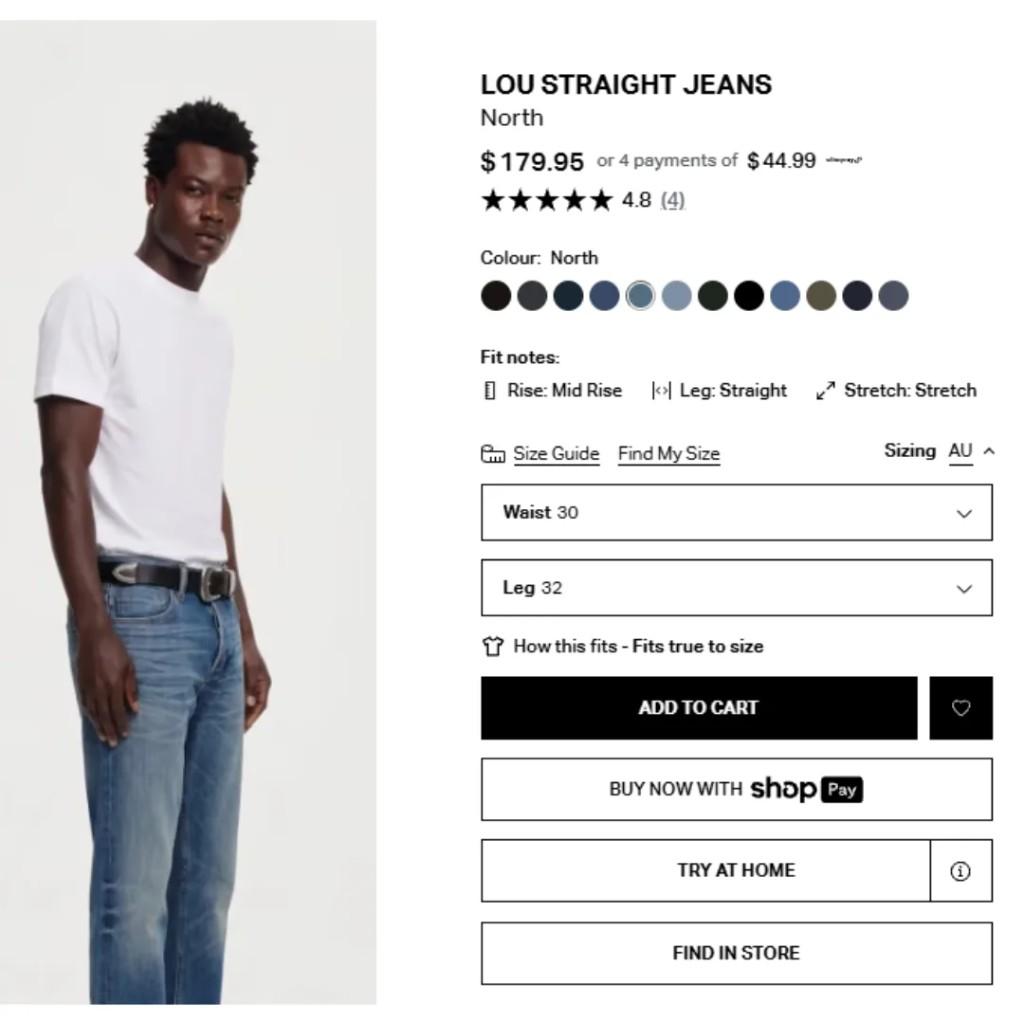
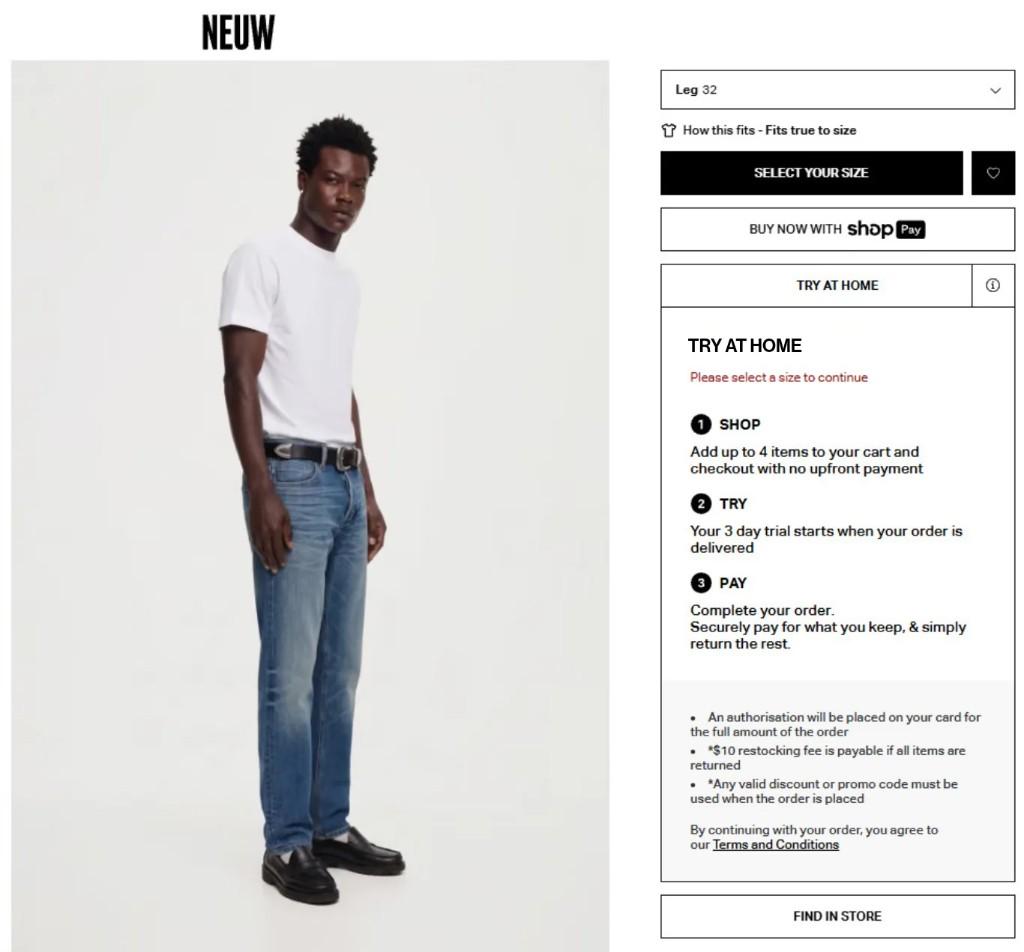
On Neuw Denim's site
How it works
Select Try at Home
Customers tap Try at Home when selecting items.
Payment Hold
The order total is reserved on their card as a pending transaction. They aren't charged yet.
Try at Home
Customers select multiple sizes or washes to try at home, then decide what actually works.
Easy Returns
They pay for what they keep and return the rest. Brands decide whether to charge a return fee and how much.
Why it matters
Fit-related returns are one of the single largest cost centres in denim ecommerce and unlike categories with more forgiving cuts, there's rarely a simple size-chart fix.
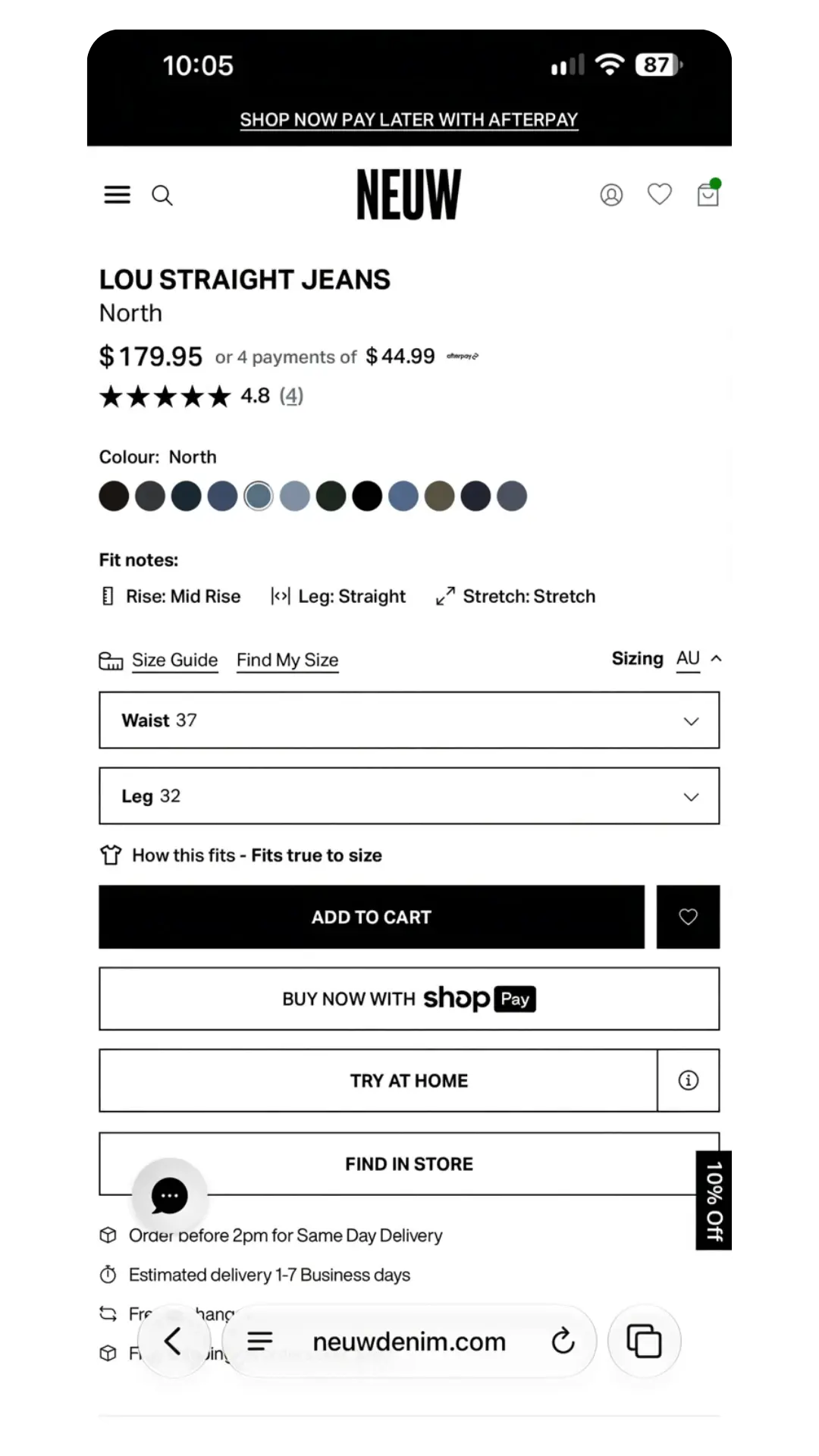
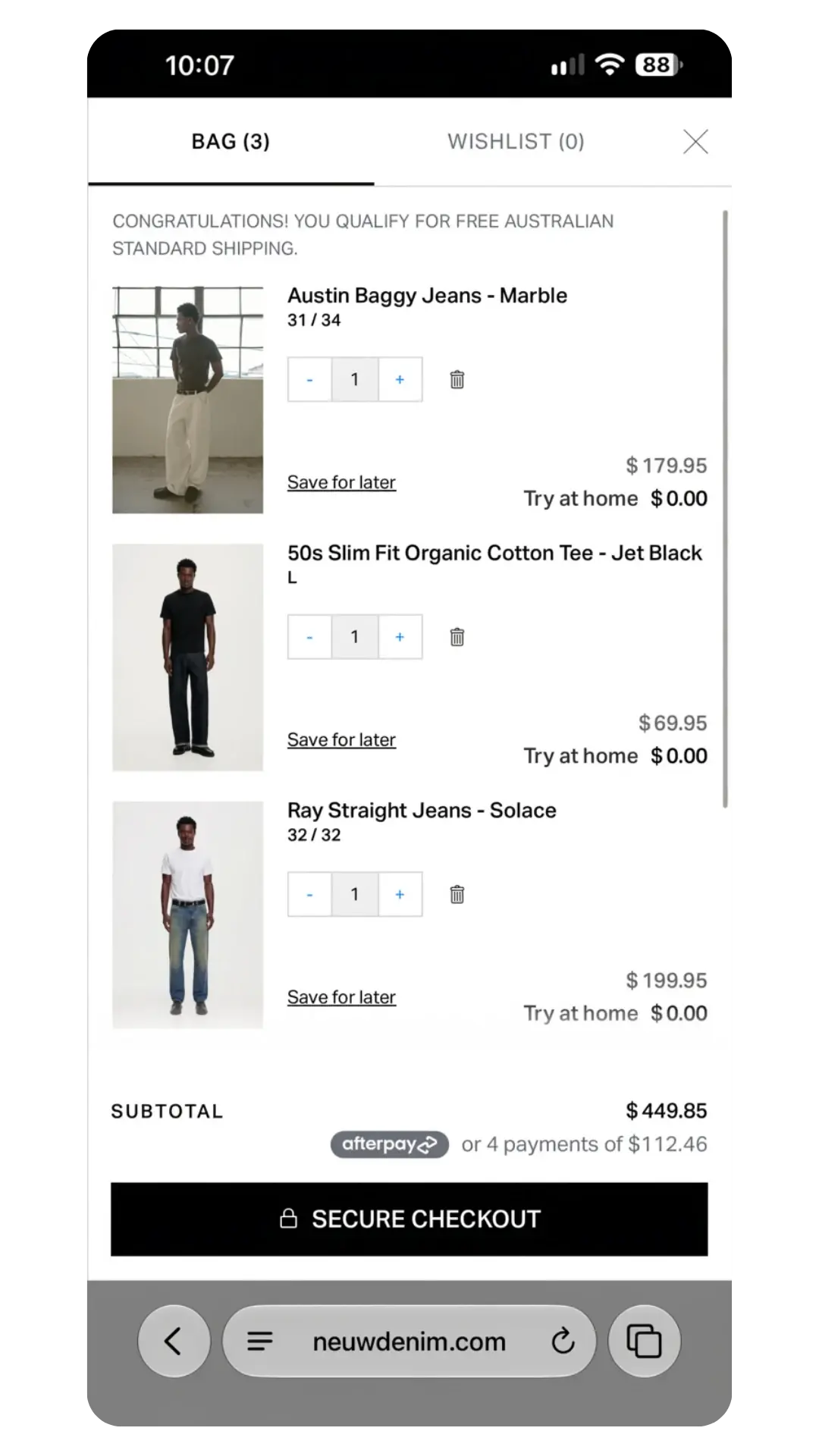
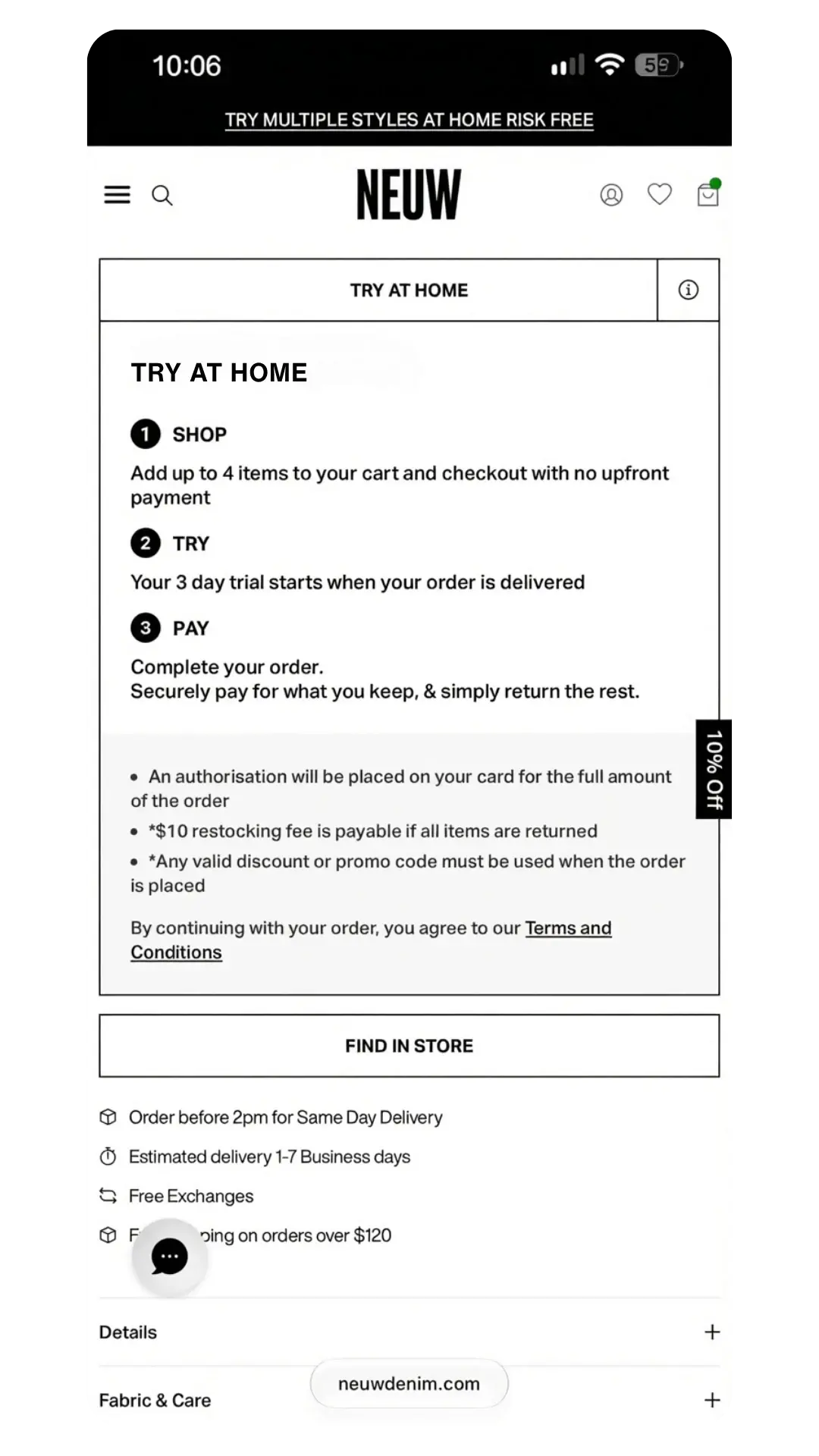
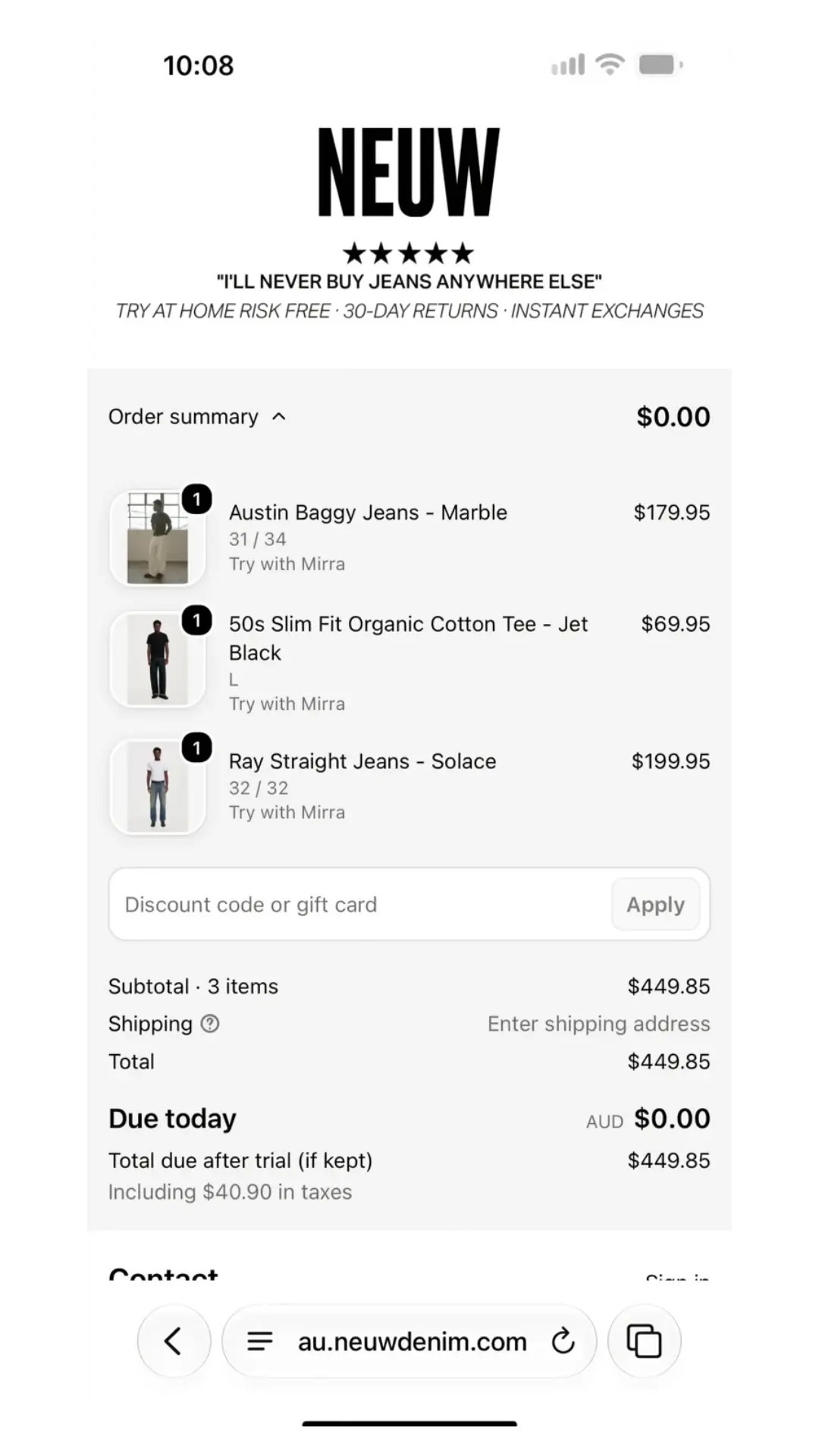
Denim carries more fit risk per unit sold than almost any other category in fashion and Neuw needed a solution that could handle that risk across a full catalogue and a national customer base, not a single hero product.
No two brands' size 30 are the same and often, no two washes within the same brand are either. Rise, inseam, stretch percentage and how a fabric recovers after the first wear all shift the fit of a garment that sits closer to the body and gets scrutinised more closely, than almost anything else a customer buys. A size chart can describe a waist measurement. It can't describe how a mid-rise stretch skinny actually sits on a real body by the end of the day.
For a brand operating at Neuw's scale, across multiple collections, washes and fits released continuously, that variability compounds. What fits perfectly in one style doesn't guarantee the next purchase will, even for a loyal, repeat customer.
Denim is also one of the most personal, body-conscious purchases a customer makes online, which means hesitation isn't just about sizing accuracy, it's about the risk of being wrong in a way that feels visible. Try Before You Buy removes that risk entirely: order multiple sizes or washes, try them at home, in real light, against real proportions and only pay for what actually works.
For an enterprise catalogue the size of Neuw's, this isn't a one-off fix for a single bestseller. It's a rollout that scales across the full range: new washes, new fits and new customers all get the same risk-free way to find out what actually works, without Neuw needing to solve fit prediction from the product page alone.
Fit-related returns are one of the single largest cost centres in denim ecommerce and unlike categories with more forgiving cuts, there's rarely a simple size-chart fix. Rise, stretch recovery and how a wash behaves after a wear or a wash cycle all vary in ways no chart communicates. Try Before You Buy shifts that problem earlier in the journey: instead of a customer guessing, ordering and returning what doesn't work, they try it at home first and only complete the purchase once they actually know it does.
At enterprise scale, that shift compounds. Fewer fit-driven returns processed, more predictable inventory movement across sizes and washes and a customer acquisition motion that isn't reliant on discounting to overcome sizing doubt.