
+50%
Average order value increase vs non-Mirra orders
Case study ·

+50%
Average order value increase vs non-Mirra orders
35.1%
Repeat purchase rate
vs 24.9% non-Mirra
71%
of repeat orders
go through standard checkout
Measured from completed Try at Home orders, after returns.
“I loved being able to try the new arrivals at home and take my time deciding what to keep.”
Fashion and apparel has the highest average cart abandonment rate at 78% driven by uncertainty of size, style, feel and quality.
Mirra moves the purchase moment from the screen to the customers home, reducing purchase anxiety and the need for discounts.
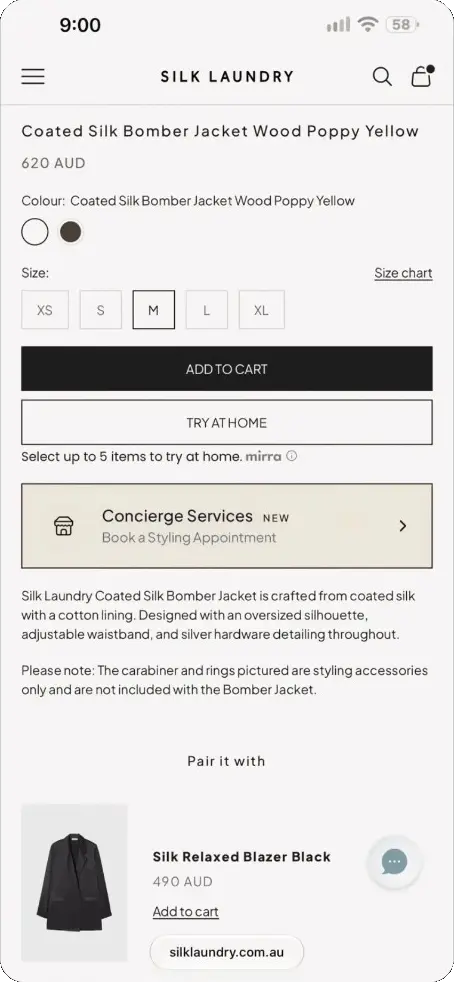
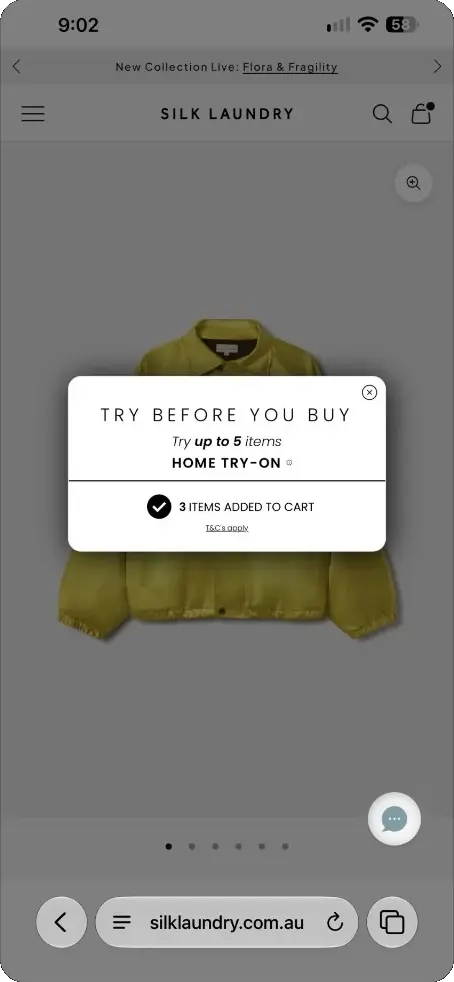
On Silk Laundry's site
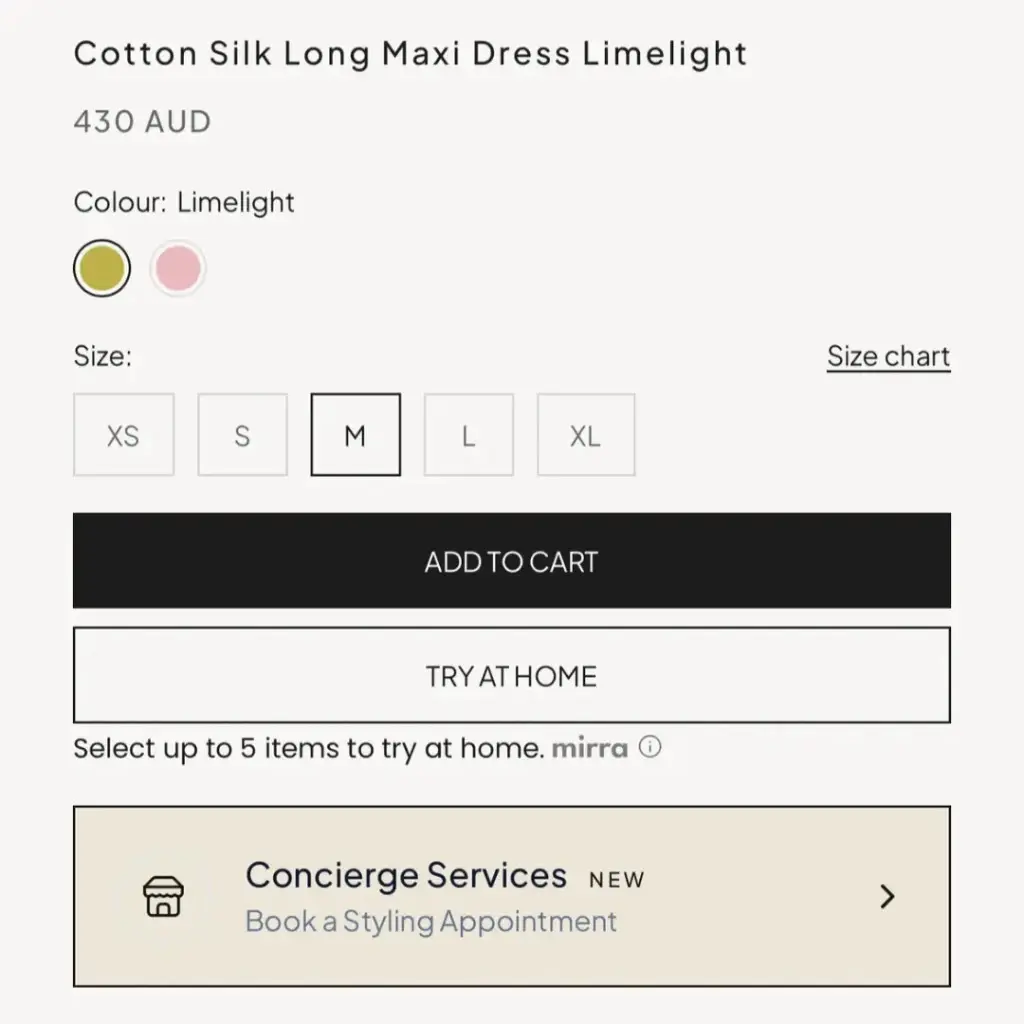
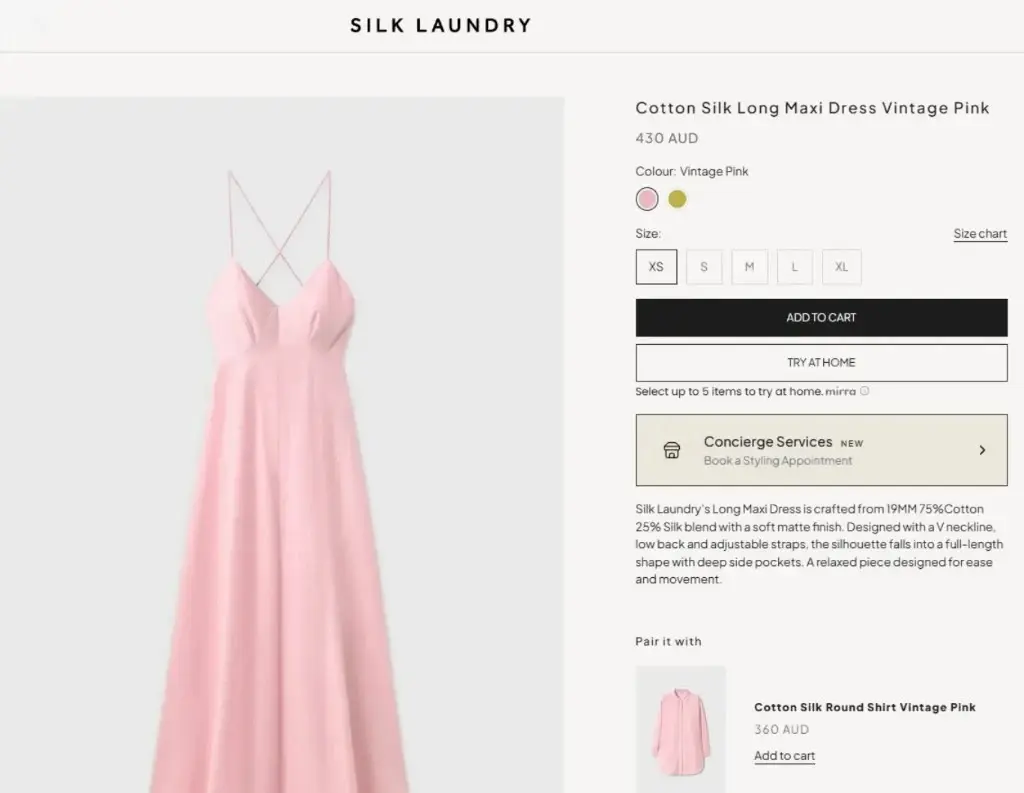
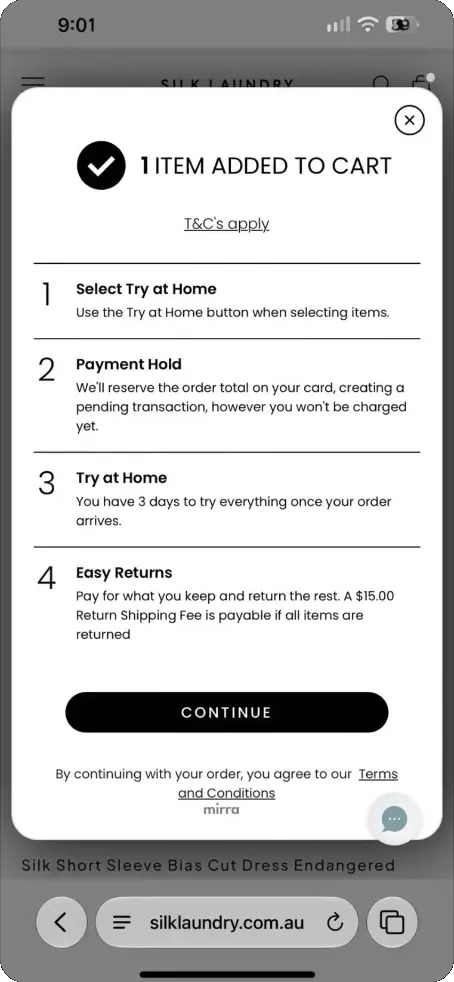
How it works
Select Try at Home
Customers tap Try at Home when selecting items.
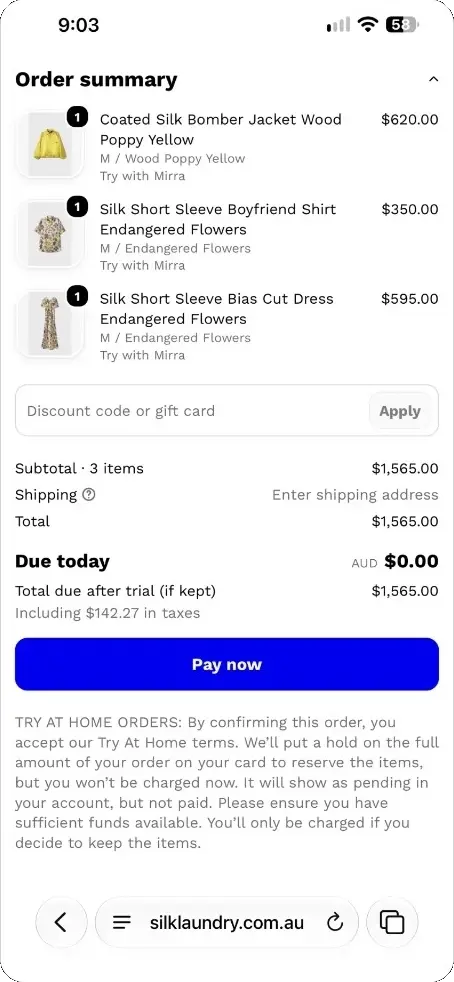
Payment Hold
The order total is reserved on their card as a pending transaction. They aren't charged yet.
Try at Home
They have 3 days to try everything once their order arrives.
Easy Returns
They pay for what they keep and return the rest. Brands decide whether to charge a return fee and how much.
Why it matters
When customers can't verify quality in advance, hesitation shows up as cart abandonment: a lost sale a brand never sees in its returns data.
Silk rarely looks the way it feels. A slip dress that reads beautifully on a model can move, drape and sit completely differently on a real body and at a premium price point, that in-hand moment is where trust is won. Silk Laundry just needed a way to get customers there.
Natural fibres behave in ways a product photo simply can't capture. Silk has weight, movement and drape that only become obvious once a garment is actually on, a bias-cut slip can skim beautifully on one body and cling in all the wrong places on another and there's no size chart that communicates how a fabric will actually fall.
That uncertainty is amplified by price. A $300 silk slip dress isn't an impulse buy. A customer weighing that decision wants to know, not guess, whether the drape, the fit and the quality feel as considered in person as they look in a photo. Get it wrong once and the brand doesn't just lose that order, it risks losing the customer's trust in every future purchase too.
Try Before You Buy answers the question a size chart never could. A customer can order multiple sizes or pieces, see how the silk actually moves and drapes against their own body, in their own light and decide with confidence rather than hope. Nothing is charged upfront, so trying feels risk-free rather than committal.
For a brand built on natural fibres and considered craftsmanship, that matters beyond the individual sale. The in-hand experience is where Silk Laundry's quality actually speaks for itself and Try Before You Buy is what gets a hesitant customer to that moment instead of losing them at the product page.
Fit isn't the only thing on the line when a customer buys silk online, quality perception is too. A natural fibre garment has to feel as premium in person as its price suggests and that's not something photography, no matter how good, can fully deliver. When customers can't verify that in advance, hesitation shows up as cart abandonment rather than as a return, a lost sale a brand never even sees in its returns data.
Try Before You Buy moves that verification earlier. Customers get to experience the drape, the weight and the quality for themselves, before they've committed, which turns a considered, premium purchase into a confident one rather than a hopeful one.